Login with Google
 Login with Facebook
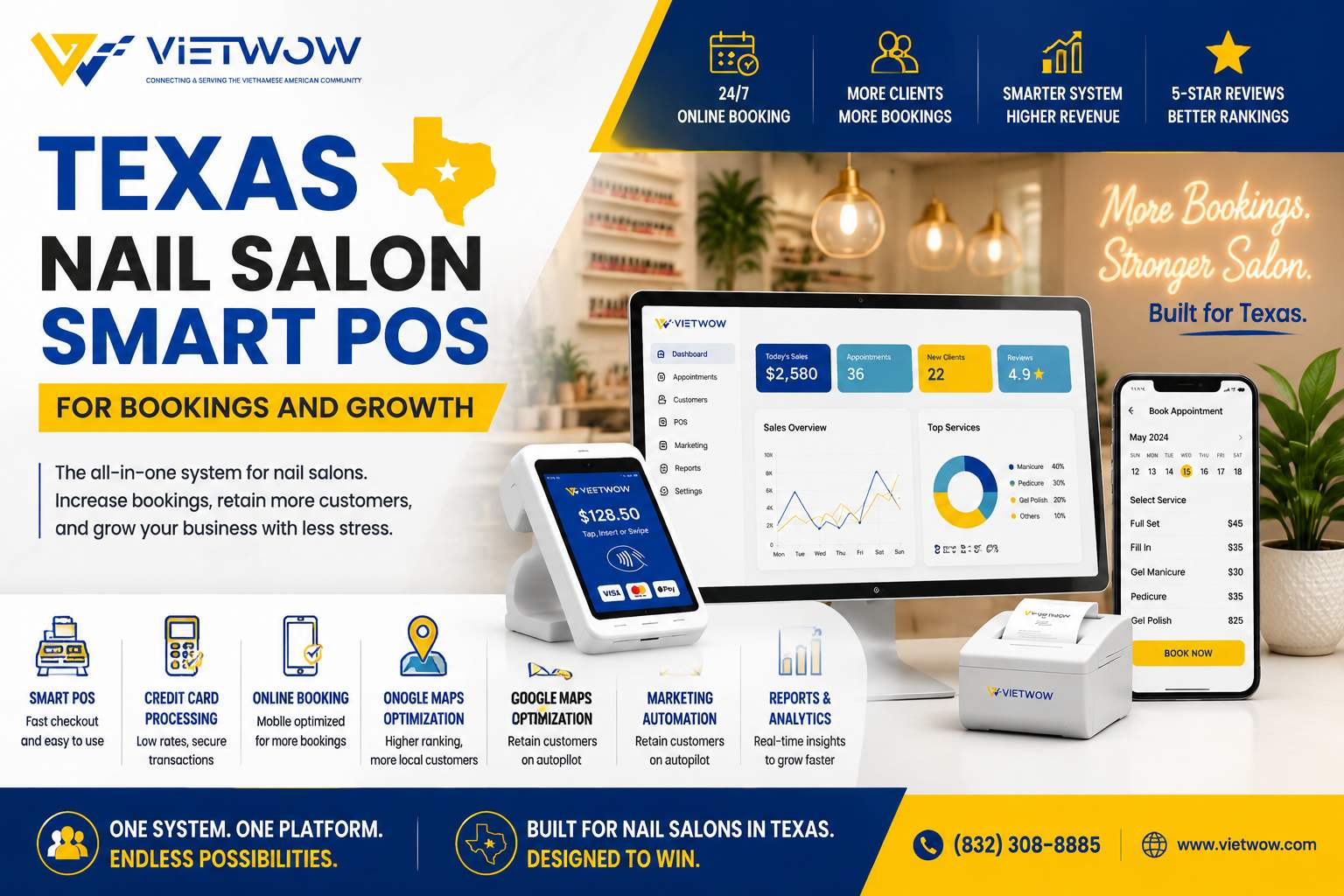
Across the United States, nail salons are no longer competing only on service quality. The way customers discover, book, and return to a salon has shifted toward digital behavior, where convenience often matters as much as the service itself. Customers now expect to find a salon online, check availability instantly, book an appointment without waiting, and complete payment smoothly without friction at checkout.
This change has quietly redefined how salon operations need to work behind the scenes. A successful nail salon today is not just built on skilled technicians, but on how well the business connects its booking flow, payment process, customer communication, and online visibility into one consistent system.
For this reason, many salon owners are moving away from disconnected tools that only solve individual problems. Instead of using one system for appointments, another for payments, and separate tools for promotions or customer follow-ups, the focus is shifting toward integrated POS systems designed specifically for salon workflows. These systems combine point-of-sale operations, online booking, customer tracking, and marketing actions into a single structure that reflects how real customers actually interact with a business.
In markets with high competition such as Texas, where nail salons operate in fast-moving urban areas like Houston, Dallas, Austin, and San Antonio, the impact of this shift becomes even more visible. Salons that rely on manual processes or disconnected software often struggle with inconsistent bookings, missed returning customers, and limited visibility in local search results. In contrast, salons using connected POS and booking systems tend to maintain steadier appointment flow, stronger repeat customer rates, and better engagement across online platforms where customers make their decisions.
The core idea behind modern salon technology is not simply digitizing operations, but connecting them in a way that supports real business growth. When booking data, payment history, and customer behavior are linked together, salon owners gain a clearer understanding of how revenue is actually generated and where opportunities for improvement exist. This is what allows a nail salon to move from reactive management to a more structured, predictable growth model supported by real customer data instead of assumptions.
Why Traditional Nail Salon Systems Are No Longer Enough in the U.S. Market
Many nail salons across the United States still operate with a mix of disconnected tools that were never designed to work together. Appointment bookings are often managed in one system, payment processing is handled through a separate terminal or card reader, and marketing activities are pushed through unrelated apps or social platforms without any real connection to actual customer behavior inside the salon.
This fragmented structure creates a gap between what happens in daily operations and what should be happening for long-term business growth. Customer information becomes scattered, making it difficult to track returning clients or understand which services drive the most repeat visits. At the same time, communication after a visit is often inconsistent or completely manual, which results in missed opportunities to bring customers back.
When booking data, payment history, and customer engagement are not connected, the salon loses visibility over the full customer journey. A client may visit once, but without structured follow-up or data-driven interaction, there is no system ensuring that the same client returns within a predictable timeframe. Over time, this directly impacts revenue stability and makes growth dependent on constant new customer acquisition instead of retention.
The Operational Gap Created by Disconnected Salon Tools
In real salon operations, the lack of integration between booking systems, POS terminals, and marketing tools creates small inefficiencies that accumulate into significant business limitations. Appointment schedules may look full on certain days, yet revenue does not reflect true capacity because gaps between bookings are not optimized. Payment data is recorded, but not used to understand customer frequency or service preference patterns. Marketing campaigns are launched, but without linking back to actual customer visits or repeat behavior, making performance difficult to measure in a meaningful way.
These issues are not always immediately visible in day-to-day operations. However, over time they lead to inconsistent customer retention, weaker appointment predictability, and reduced ability to scale without increasing manual workload. The salon becomes reactive rather than structured, constantly responding to daily demand instead of shaping it through systems.
The Rise of Integrated POS Systems for Nail Salons in the United States
As the nail salon industry becomes more competitive across the U.S., especially in high-demand states like Texas where customer volume and salon density continue to grow, the need for integrated operational systems has become more apparent. Business owners are increasingly looking for solutions that combine point-of-sale functionality, online booking, customer management, and marketing automation within a single framework.
A modern nail salon POS system is no longer limited to processing payments through a card reader or recording transactions at checkout. It functions as the operational center of the business, connecting every interaction a customer has with the salon into a unified data structure. From the moment a booking is made to the final payment and post-visit engagement, each step becomes part of a continuous system that can be tracked, analyzed, and improved.
This shift is particularly important in markets where customer choice is abundant and competition is high. In Texas metro areas such as Houston, Dallas, Austin, and surrounding business districts, customers have multiple salon options within a short distance. In this environment, convenience, speed, and consistent digital experience often influence decision-making as much as pricing or service quality.
From Payment Processing to Customer Behavior Intelligence
The evolution of POS systems in the nail salon industry is closely tied to the shift from transaction-based thinking to behavior-based understanding. Instead of simply recording that a payment has been completed, modern systems are designed to interpret what that transaction represents in the context of customer lifecycle patterns.
For example, after a service is completed, the system can identify whether the customer is new or returning, how frequently they visit, and what services they typically choose. Based on this information, automated actions can be triggered to maintain engagement without requiring manual follow-up from staff.
This may include timely rebooking reminders based on actual visit cycles, personalized communication that reflects previous services, and structured review requests that help strengthen the salon’s online presence. Over time, these interactions contribute not only to higher retention rates but also to improved visibility in local search environments where customer feedback and engagement play a major role in ranking performance.
The Real Role of Online Booking Systems in Modern Nail Salon Growth
Online booking has become a defining part of how nail salons in the United States attract and retain customers. Most clients no longer want to make phone calls or wait for confirmation during business hours. They expect a direct, instant booking experience that works naturally from their mobile devices, regardless of time or location.
When this expectation is not met, the decision is often made before the salon even has a chance to communicate. Customers simply choose another business that provides a smoother and faster booking experience. This shift has made booking systems not just a convenience tool, but a core part of customer acquisition.
In competitive service markets, especially in regions like Texas where nail salons operate in dense urban environments with high customer turnover, the booking experience often determines whether a business wins or loses repeat customers. A slow or disconnected booking process creates friction, while a seamless system builds trust from the very first interaction.
How Modern Booking Systems Directly Influence Revenue Performance
A properly designed booking system is no longer limited to showing available time slots. It plays an active role in shaping revenue flow by controlling how efficiently a salon manages capacity, reduces idle time, and distributes customer appointments across staff schedules.
When appointments are properly structured, salons can reduce gaps between services and increase the number of clients served per day without increasing workload. This directly improves daily revenue consistency while maintaining service quality standards.
Beyond scheduling efficiency, automated reminders help reduce missed appointments, which is one of the most common sources of lost revenue in nail salons. Customers receive timely notifications that keep appointments top of mind, reducing no-shows and last-minute cancellations that disrupt daily operations.
At the same time, a connected booking system improves the overall customer experience by eliminating waiting uncertainty. Clients can see availability in real time, select preferred technicians, and complete bookings without back-and-forth communication. This simplicity often becomes a deciding factor in customer retention.
Google Maps Visibility as a Core Growth Channel for Nail Salons
For most nail salons in the United States, local search visibility is one of the strongest drivers of new customer acquisition. When potential clients search for services such as nail care, manicure, or pedicure near them, the businesses that appear at the top of Google Maps typically receive the majority of traffic and bookings.
This visibility is not based on chance. It is shaped by a combination of engagement activity, customer reviews, booking behavior, and consistency of business information across platforms. Salons that maintain strong interaction signals tend to perform better in local search results over time.
In high-competition markets like Texas, where customers often choose between multiple salons within a short distance, even small improvements in visibility can significantly impact daily booking volume and long-term customer acquisition.
How Integrated POS Systems Strengthen Local Search Performance
Modern POS systems designed for nail salons contribute indirectly to Google Maps performance by increasing structured customer engagement. When booking, payment, and customer history are connected within one system, it becomes easier to encourage actions that improve visibility over time.
These actions often include consistent review generation after completed services, increased booking activity through direct scheduling links, and more frequent customer interaction that signals relevance to local search systems.
Instead of manually managing marketing or relying on separate tools, salon owners can maintain steady engagement patterns through automated system behavior. This creates a more stable foundation for long-term visibility without requiring constant operational effort.
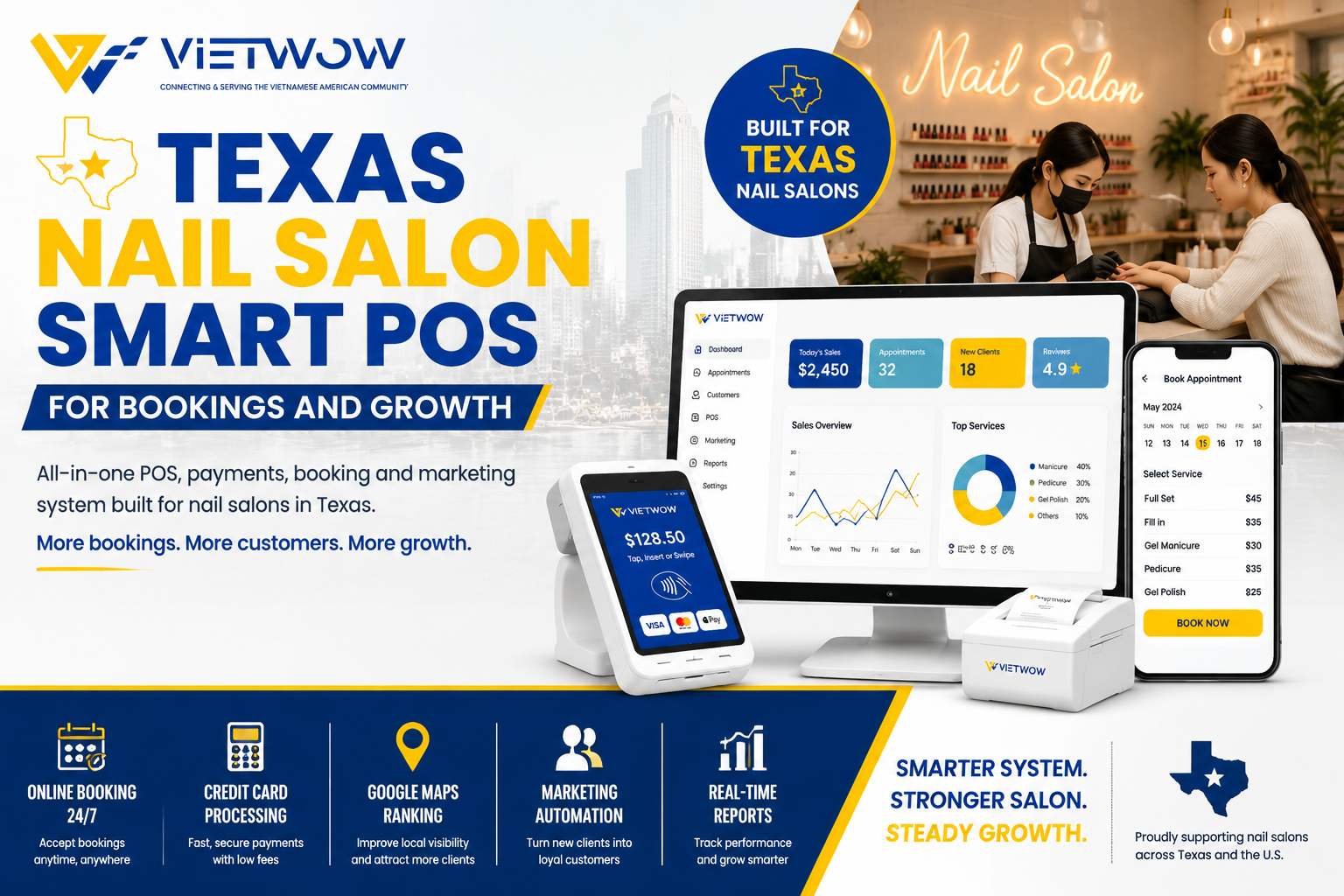
Marketing Automation and the Shift From One-Time Visits to Repeat Customers
One of the most persistent challenges in the nail salon industry is not attracting new customers, but converting them into repeat clients. Many salons experience strong initial traffic but struggle to maintain consistent return visits, which creates unstable revenue patterns over time.
Marketing automation changes this dynamic by ensuring that customer engagement continues after the first visit without requiring manual follow-up from staff. Instead of relying on memory or manual outreach, communication becomes structured and behavior-based.
How Data-Driven Engagement Builds Customer Retention
When customer activity is tracked through a connected POS system, it becomes possible to understand visit frequency, preferred services, and spending patterns. This information allows the system to trigger timely engagement actions that feel natural rather than promotional.
Customers may receive reminders aligned with their typical refill cycles, personalized messages based on previous services, or loyalty incentives designed around actual visit behavior. Over time, this creates a consistent return pattern that strengthens retention without requiring constant manual marketing effort.
For salons operating in competitive environments such as Texas metropolitan areas, this structured approach to customer engagement helps stabilize revenue and reduce dependency on continuous new customer acquisition.
Why System Integration Has Become the Real Growth Factor for Nail Salon Businesses
The gap between average-performing nail salons and high-growth salons is no longer defined by technical skill or even location alone. The real difference comes from how well the business is structurally connected behind the scenes, especially in how booking activity, payment processing, customer data, and marketing actions are managed as a single flow rather than separate tasks.
When these core components operate independently, the salon is forced into constant manual coordination. Staff must switch between systems, customer information becomes fragmented across platforms, and marketing decisions are made without a complete understanding of customer behavior. This creates a business environment where growth depends heavily on daily effort instead of predictable systems.
In contrast, salons that operate through an integrated nail salon POS system are able to align every part of the customer journey. A booking is not just an appointment; it becomes a data point connected to service history, payment behavior, and future engagement opportunities. This structure allows the business to operate with more clarity and less operational friction, especially as customer volume increases.
This difference becomes more visible in competitive U.S. markets where customer expectations are shaped by convenience and speed. In areas such as Texas, where nail salons operate in fast-moving commercial environments with high customer turnover, disconnected systems often lead to missed opportunities that directly impact revenue stability and customer retention.
How Connected Systems Change Daily Salon Operations
When booking, payments, and customer information are unified within one system, daily operations shift from reactive management to structured control. Appointment flow becomes easier to monitor, gaps in the schedule are reduced, and staff utilization becomes more balanced throughout the day.
Payment data also becomes more meaningful when it is connected to customer profiles. Instead of simply recording transactions, the system can identify patterns such as repeat visit frequency, service preferences, and average spending behavior. This creates a clearer understanding of which customers drive long-term value and which services contribute most to revenue consistency.
At the same time, marketing becomes more precise because it is based on real customer activity rather than generic promotions. Engagement can be triggered based on actual visit cycles, previous service history, or inactivity periods, which makes communication more relevant and increases the likelihood of return visits.
The Shift Toward Structured Salon Growth Systems in the U.S.
The nail salon industry in the United States is moving toward a more structured operational model where technology is no longer just a support tool but part of the core business infrastructure. This shift is driven by rising customer expectations, increased competition, and the growing importance of digital visibility in local search behavior.
Customers now evaluate salons not only based on service quality but also on how easy it is to discover, book, and interact with the business online. This has made system efficiency directly connected to customer acquisition performance, especially in highly competitive markets where multiple salons serve the same geographic area.
In Texas, where salon density continues to grow across major urban centers such as Houston, Dallas, and Austin, businesses that rely on disconnected tools often struggle to maintain consistency in bookings and customer retention. Meanwhile, salons that operate through integrated POS and booking systems are better positioned to manage demand fluctuations and maintain steady growth patterns.
Why Integration Creates Long-Term Business Stability
An integrated salon system creates stability by reducing dependency on manual coordination and isolated decision-making. When customer data, booking behavior, and payment history are unified, the business develops a more accurate understanding of revenue flow and customer lifecycle patterns.
This allows salon owners to move beyond short-term operational thinking and focus on long-term structure. Instead of reacting to daily fluctuations, they can identify predictable trends in customer behavior and adjust scheduling, staffing, and engagement strategies accordingly.
Over time, this structured approach improves both efficiency and profitability, not by increasing workload, but by reducing operational gaps that normally limit growth in traditional salon setups.
How Texas Is Becoming a Leading Market for Salon System Transformation
Texas has become one of the most dynamic beauty service markets in the United States due to population growth, strong consumer demand, and continuous expansion of small business activity. This environment creates both opportunity and pressure for nail salon owners.
As competition increases, businesses are no longer competing solely on pricing or location. The focus has shifted toward customer experience, convenience, and digital accessibility. Salons that provide seamless booking experiences, fast payment processing, and consistent online engagement are naturally positioned to attract and retain more customers.
Within this environment, integrated POS systems and digital salon infrastructure are becoming a defining factor in business performance. The ability to connect customer interactions across booking, payment, and marketing channels is no longer an advantage reserved for large businesses; it is becoming a standard requirement for sustainable growth in modern salon operations.
Introducing a Unified POS, Payment, and Marketing System for Nail Salon Growth in the United States
VietWow Smart POS & Marketing System is designed as a complete operational structure for nail salons in the United States, built around the way real salons actually run day to day rather than forcing businesses to adapt to disconnected software tools.
Most traditional systems separate point-of-sale, credit card processing, online booking, customer management, and marketing into different platforms. This separation often creates gaps in customer tracking, inconsistent communication after service, and limited visibility into how revenue is actually generated.
By connecting these core functions into one integrated system, salon owners gain a clearer view of their entire business flow, from the first customer interaction online to repeat visits and long-term loyalty patterns. The focus is not only on processing transactions, but on supporting continuous business growth through structured customer data and automated engagement.
For salons operating in competitive U.S. markets where customer expectations are shaped by speed, convenience, and digital experience, this type of integration has become increasingly important. It allows businesses to operate with more consistency while reducing the need for manual coordination across multiple tools.
How a Connected Salon System Changes Daily Business Operations
When POS, payment processing, booking, and customer communication are unified, the entire operational model becomes more efficient. Appointment scheduling is no longer isolated from customer history, and payment records are directly linked to service behavior and visit frequency.
This structure allows salon owners to understand not just how much revenue is generated, but how that revenue is formed over time. It becomes easier to identify returning customers, track service preferences, and recognize patterns that influence long-term profitability.
Marketing activity also becomes more aligned with actual customer behavior. Instead of sending general promotions, engagement can be based on real visit cycles and service history, creating more relevant communication that naturally supports repeat business without feeling forced or disconnected.
The Direction of Modern Salon Growth Systems in the U.S. Market
The nail salon industry in the United States is moving toward a model where operational systems play a central role in business performance. As customer expectations continue to evolve, salons are expected to provide not only quality service but also a seamless digital experience that begins at discovery and continues after the visit.
This shift is especially visible in high-competition regions where customers have multiple salon options within close proximity. In these environments, the ability to maintain consistent bookings, encourage repeat visits, and manage customer relationships through structured systems becomes a key factor in business stability.
Texas represents one of the strongest examples of this transformation, where growing demand and expanding salon density have increased pressure on businesses to adopt more efficient operational models. Salons that rely on fragmented tools often struggle with inconsistent scheduling and limited customer retention, while those using integrated systems are better positioned to manage growth in a predictable way.
How Integrated POS and Marketing Systems Support Long-Term Growth
When booking activity, payment data, and customer behavior are connected within a single system, salon owners gain access to a more complete understanding of how their business performs over time. This allows decision-making to move away from guesswork and toward behavior-based insights.
Customer retention becomes more structured because communication can be aligned with real service cycles rather than random outreach. Repeat visits can be encouraged through timely engagement that reflects actual customer history, creating a more natural return pattern over time.
At the same time, operational efficiency improves because staff no longer need to manage separate tools or manually reconcile data across platforms. This reduces complexity and allows more focus on service quality and customer experience rather than administrative workload.
Building a System-Driven Approach to Salon Performance
Modern salon growth is increasingly defined by how well the business is structured behind the scenes. A system-driven approach connects every stage of the customer journey, ensuring that each interaction contributes to a broader understanding of business performance.
This approach does not replace the importance of service quality, but it strengthens how that quality is delivered and sustained over time. When systems are aligned, salons can scale more effectively, maintain consistency across staff and locations, and build stronger customer relationships through continuous engagement rather than isolated interactions.
In competitive markets like Texas and other growing regions across the United States, this structured approach is becoming a practical foundation for long-term salon development, where operational clarity and customer connectivity directly influence revenue stability and business expansion.
VietWow Smart POS & Marketing System is positioned within this shift as an integrated framework that supports POS operations, payment processing, online booking, and customer engagement within a single connected environment designed for real-world salon workflows.
Contact VietWow
- Website: www.vietwow.com
- Email: info@vietwow.com
- Nationwide Hotline: (972) 983-2772
- Head Office: 6565 N. MacArthur Blvd., Ste. 225, Irving, TX, 75039