Login with Google
 Login with Facebook
VietWow helps Vietnamese-owned nail salons and restaurants bring payments, daily operations, and customer marketing into one practical business system. Instead of managing a card terminal from one provider, a POS system from another, an online booking platform from somewhere else, and a marketing company that only reports clicks, business owners can build a more connected path from the first customer search to the final transaction.
That approach is especially important for local businesses in Irving. A nail salon may need to manage appointments, technician turns, tips, service history, online booking, reviews, and repeat visits. A restaurant has a different flow involving order entry, menu modifiers, kitchen communication, takeout, online ordering, payments, and customer retention. Both businesses need reliable credit card processing, but they should not be forced into the same operating model.
VietWow works with nail salons, restaurants, and other Vietnamese-American businesses to identify where money, time, or customers are being lost. The solution may include a nail salon POS system, restaurant POS system, credit card machine, merchant services, website, Google Business Profile management, online booking, online ordering, social media content, and paid advertising. Each part has a specific job, but the real value appears when those parts work together.
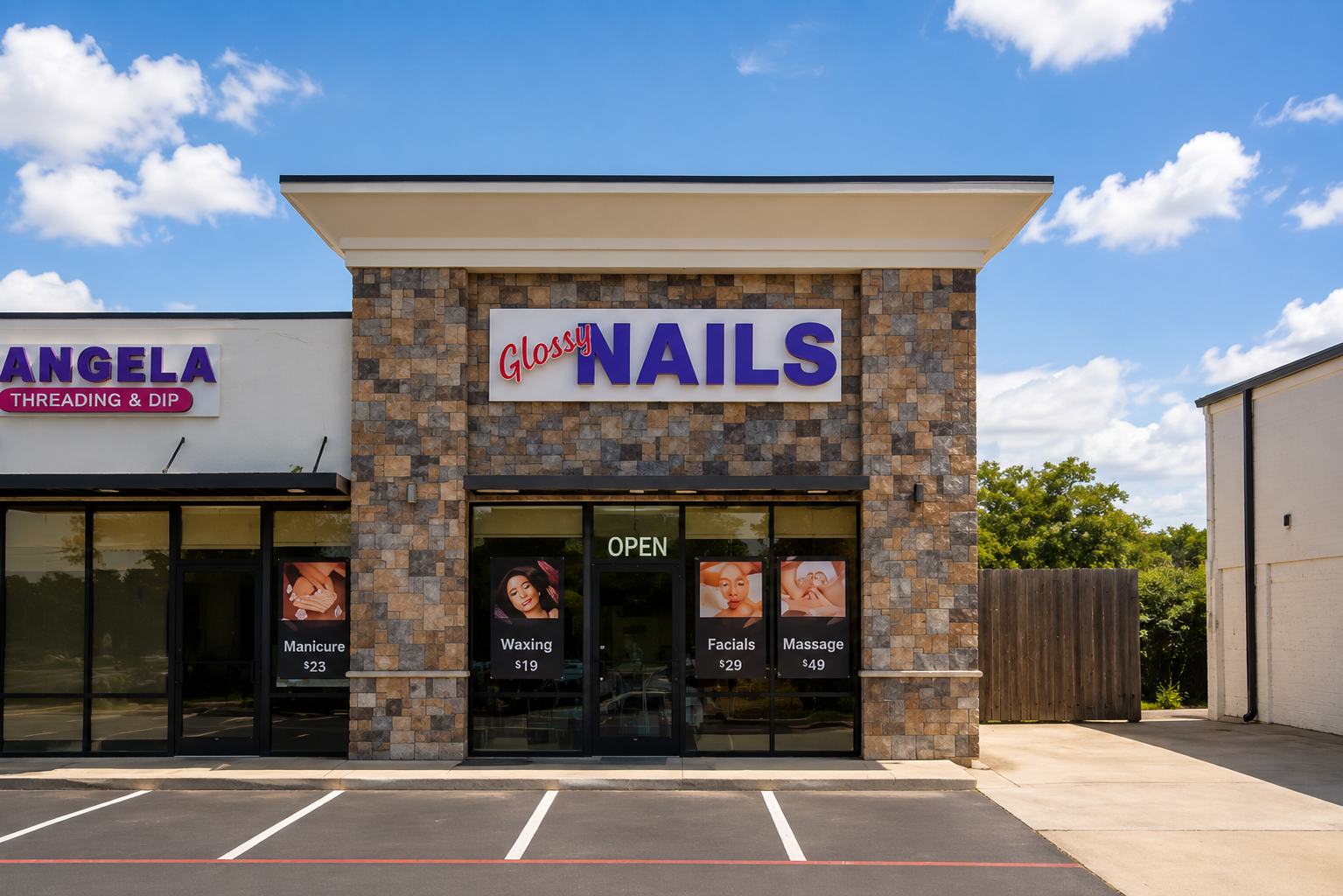
Glossy Nails at 2902 N MacArthur Blvd in Irving is one example of this connected approach. VietWow has supported the salon’s online visibility, social media presence, website, customer acquisition, and booking journey. According to project tracking provided by VietWow, the salon’s Google rating improved from 3.9 to 4.5. Reaching 4.9 remains a long-term objective built around authentic customer experiences, consistent service, and responsible reputation management.
POS Systems Built Around Daily Operations
A point-of-sale system should do more than calculate a total and print a receipt. It sits at the center of daily business activity. Every appointment, order, payment, tip, refund, customer record, and end-of-day report can pass through the system. When the POS does not match the way a business operates, employees create workarounds, managers lose visibility, and customers feel the delay.
The right POS system for an Irving business begins with workflow, not hardware. VietWow first looks at how customers enter the business, how services or orders are recorded, how employees interact with the system, how payments are accepted, and what information the owner needs after closing. This process helps prevent the common mistake of purchasing an attractive terminal that cannot handle the realities of a busy salon or restaurant.
A single-location business may need a straightforward setup that employees can learn quickly. A larger salon may need stronger appointment, technician, payroll, and customer-management tools. A restaurant may require multiple terminals, kitchen routing, online orders, detailed menu modifiers, and reliable reporting across different shifts. The POS configuration should follow the operation rather than forcing the operation to follow the software.
Nail Salon POS Systems Need a Salon-Specific Workflow
A nail salon does not operate like a standard retail store. One customer may receive several services from more than one technician. Tips may need to be assigned separately. Walk-ins and appointments can arrive at the same time. Service duration varies, and the front desk must keep the customer experience moving while technicians remain focused on their work.
A nail salon POS system should be evaluated around those realities. The owner needs to know how check-in works, how appointments are connected to services, how technician turns are managed, how tips and commissions are recorded, and how customer history can support future visits. A system that handles payments but ignores these operational details can create more manual work instead of reducing it.
Client Check-In and Technician Flow
Check-in is one of the first moments that shapes the customer’s impression. A returning client should not have to repeat the same information every time. The front desk should be able to identify the appointment, confirm the requested service, and understand whether the customer has a preferred technician.
For walk-ins, the process needs to remain flexible. The salon may need to see which technicians are available, who is next in the turn rotation, and which person has the right skill for the requested service. When this information is scattered across paper notes, text messages, and separate applications, mistakes become more likely during peak hours.
A properly configured salon management system creates a clearer handoff from the front desk to the nail technician. It also gives the owner a more accurate record of services performed instead of relying on handwritten tickets that must be counted again at the end of the day.
Appointments, Online Booking, and Rebooking
Online booking for a nail salon should make it easier for customers to choose a service and reserve a time without calling during business hours. It should also help the salon manage capacity. Accepting more appointments is not useful if the system allows overlapping services, ignores technician availability, or creates a calendar employees cannot follow.
The booking process must be simple on a phone because many customers discover a salon while using Google Maps, Instagram, Facebook, or TikTok. If they have to zoom in, search for a phone number, or complete too many steps, some will abandon the appointment and choose another salon.
Rebooking is equally important. A customer who receives gel, dip, acrylic, or a recurring pedicure service may return on a predictable schedule. The POS and booking system can help the salon recognize that pattern and make the next appointment easier to schedule. This creates a more stable client base without depending entirely on new-customer advertising every month.
Tips, Commissions, and Service Reporting
Tip and commission handling can become complicated when several technicians participate in one visit. The system should make it clear which services were performed, who performed them, how tips were assigned, and how the information will appear in payroll or internal reporting.
The owner also needs more than a total sales number. Useful salon reports can reveal which services are requested most often, which days produce the highest volume, how the average ticket changes over time, and how much business comes from returning clients. These insights help the owner make decisions about staffing, service menus, promotions, and operating hours.
VietWow helps business owners evaluate the reporting they actually need before recommending a POS setup. The goal is not to overwhelm the owner with dashboards. It is to provide information that can be used to run the salon with greater control.
Restaurant POS Systems Must Move at Service Speed
A restaurant POS system handles a different type of pressure. Orders need to move quickly from the customer to the cashier, server, kitchen, and payment station. A missed modifier, delayed ticket, or incorrectly entered order can affect food cost, service time, and the customer’s entire experience.
Vietnamese restaurants may also have menus with different sizes, protein choices, add-ons, beverages, combination meals, and preparation notes. The POS needs to make these options easy for employees to enter accurately. A system that takes too many steps during a lunch rush can slow down the line and increase mistakes.
Order Entry and Menu Management
A well-organized restaurant POS should reflect the actual menu structure. Popular items need to be easy to locate. Modifiers should appear logically, and special instructions should reach the correct preparation area. When employees can enter orders confidently, training becomes easier and service becomes more consistent.
Menu management also matters when pricing, ingredients, or availability changes. Owners should be able to update an item without creating conflicting information across the in-store menu, online ordering page, and payment system. If customers see one price online and another at checkout, the issue affects both trust and staff workload.
Dine-In, Takeout, and Online Orders
Many restaurants now receive revenue from several order types. Dine-in customers may pay at the table or counter. Takeout orders can arrive by phone or website. Online ordering may add another stream that must be coordinated with the kitchen.
The POS system should help employees recognize the order type immediately and route it correctly. Online orders should not disappear into a separate device that no one hears during a busy period. The owner should also be able to compare dine-in, takeout, and online sales to understand which channels are producing real value.
Marketing becomes more effective when it is connected to this information. If a campaign promotes online ordering, the business should be able to measure the resulting orders rather than stopping at website traffic. If a lunch promotion generates transactions but produces very low margins, the owner needs enough data to adjust the offer.
Sales, Labor, and Product Performance
A restaurant owner needs to see how sales change by hour, shift, menu category, and order type. This information can support staffing decisions, menu planning, and inventory control. It can also identify items that sell frequently but contribute little profit or products that remain on the menu without meaningful demand.
The purpose of reporting is not to turn a restaurant owner into a data analyst. It is to answer practical questions. The owner should know when the business is busiest, which products drive revenue, which promotions create profitable orders, and whether customer traffic is improving over time.
Credit Card Machines Need Clear Payment Processing
A credit card machine and a complete POS system are related, but they are not the same thing. The card terminal accepts the payment. The POS records the sale, connects it to a service or order, organizes business data, and may support customer management, booking, reporting, or online transactions.
Some businesses only need a reliable card machine. Others need an integrated point-of-sale system with multiple terminals and industry-specific software. VietWow helps owners understand that difference before they commit to equipment or a processing agreement.
Processing Rates Are Only One Part of the Cost
Business owners naturally ask about the credit card processing rate, but a low advertised number does not always explain the full cost. The final expense may depend on card type, transaction method, equipment, monthly service, software, chargebacks, compliance requirements, and other terms in the processing agreement.
A responsible comparison should look beyond one percentage. Owners need to understand how charges appear on the monthly statement, when deposits reach the bank, what happens when a customer disputes a payment, and which costs are fixed or variable.
VietWow’s role is to help the business review its payment needs in the context of actual transaction volume and workflow. A nail salon with appointments and tips may need a different configuration from a restaurant processing a high number of small transactions during lunch and dinner.
Card Terminal Reliability Affects Customer Experience
Payment is the last step of the visit, but customers remember it when something goes wrong. A slow terminal, unstable connection, confusing tip screen, or failed transaction can create an awkward ending to an otherwise positive experience.
Owners should evaluate whether the credit card machine supports the payment methods their customers use, including chip cards and contactless payments. They should also understand the support process if the device stops working during business hours. Reliable assistance can matter as much as the hardware itself.
The system should also make reconciliation easier. At the end of the day, the transaction total on the terminal should be understandable alongside the POS sales report, tips, refunds, and deposits. When these numbers do not align, managers spend unnecessary time searching for the difference.
Payment Data Should Remain Useful After Checkout
A completed transaction contains information about what was purchased, when it was purchased, and how much the customer spent. When payment and POS records are disconnected, the business loses part of that insight.
An integrated setup can give the owner a clearer view of average ticket size, service mix, order volume, repeat activity, and sales patterns. Sensitive card information must remain protected, but the business can still use transaction-level reporting to understand performance and make better decisions.
Local Marketing Must Reach Ready-to-Buy Customers
Marketing for nail salons and restaurants should not begin with posting more often. It should begin with the moment a customer develops a need. A nail customer may search for a pedicure, acrylic nails, gel manicure, nail art, or a salon with same-day availability. A restaurant customer may search for Vietnamese food, pho, takeout, lunch, dinner, delivery, or online ordering.
These customers are not looking for a marketing message. They are trying to make a decision. The business that provides the clearest information, strongest evidence, easiest next step, and most trustworthy local presence has a better chance of earning the visit.
VietWow builds marketing around that decision process. Search visibility creates discovery. Photos and content create interest. Reviews reduce uncertainty. The website provides details. Booking or ordering captures the action. POS and payment data show whether the marketing produced a real transaction.
Google Maps Can Drive Calls, Visits, and Bookings
Google Maps is often one of the most valuable discovery channels for a local nail salon or restaurant. Customers use it when they want a nearby option and are prepared to act. They compare ratings, recent reviews, photos, hours, distance, services, menus, and the ease of calling or getting directions.
A complete Google Business Profile needs accurate business information, appropriate categories, current hours, real photos, service or menu details, and working links. This does not require repeating “Irving, TX 75062” in every paragraph. Location relevance comes from accurate business data, a legitimate local presence, consistent information, and content connected to the services customers actually need.
Google Business Profile Information Must Stay Consistent
The business name, address, phone number, website, operating hours, and booking or ordering links should match across Google, the website, business directories, and social media profiles. Small inconsistencies can confuse customers and make the business appear poorly maintained.
Special hours also need attention. A customer who drives to a restaurant or nail salon based on an incorrect holiday schedule may not return. The damage can extend beyond one missed transaction if that experience becomes a negative review.
Photos Need to Help Customers Make a Decision
For nail salons, customers want to see recent work, clean stations, pedicure areas, technicians, color options, and the overall atmosphere. For restaurants, customers look for real dishes, portion presentation, dining areas, ordering counters, and menu information.
Generic stock images may make a profile look polished, but they do not prove what a customer will experience at the location. Original photos provide stronger evidence and give the business more material for its website, social media, advertising, and Google profile.
Review Growth Must Come From Real Experiences
Reviews influence both trust and customer choice, but the process must remain authentic. A business can make it easier for customers to find the review link and can politely invite them to share their experience. It should not purchase reviews, create fake accounts, or offer rewards in exchange for a specific rating.
Responses should also sound human. Repeating the same promotional reply under every review makes the business look automated. A useful response acknowledges the customer’s actual experience, protects personal information, and addresses concerns without becoming defensive.
Nail Salon Marketing Should Support Rebooking
Nail salon marketing is highly visual, but a beautiful feed alone does not create a healthy business. A photo or video should help the customer understand the salon’s style, service quality, nail technicians, atmosphere, and booking process.
Instagram and TikTok can introduce Glossy Nails to people who were not actively searching at that moment. Google Maps captures customers with more immediate intent. Facebook can support local familiarity and communication. The website brings these channels together and gives the customer a stable place to review services and request an appointment.
Content Needs a Business Purpose
A finished nail set may build interest. A short process video can demonstrate technique. A technician introduction can create personal trust. A salon tour can reduce uncertainty for first-time clients. A maintenance guide can help customers understand how to protect their nails after a service.
These content types perform different jobs. VietWow organizes them around customer decisions instead of publishing random images to keep a page active. The content calendar should reflect the salon’s actual services, available talent, seasonal demand, and appointment capacity.
Advertising Should Lead to a Trackable Appointment
Paid advertising can bring immediate attention to a new salon, an underbooked service, or available appointments. The campaign still needs a clear destination. Sending every visitor to a generic homepage makes it difficult for customers to find the service they saw in the ad.
A stronger campaign connects the ad to a relevant landing page, service description, phone call, or booking path. Tracking should continue beyond the click. VietWow looks at booking starts, completed appointments, cost per booked client, customer attendance, and the value of the resulting visit.
This approach helps the owner recognize the difference between an inexpensive click and a profitable customer. The cheapest traffic is not always the traffic most likely to book, show up, and return.
Restaurant Marketing Must Connect to Orders
Restaurant marketing operates on a different customer timeline. A diner may decide where to eat within minutes. Accurate hours, a readable menu, strong food photography, clear directions, online ordering, and recent customer feedback can influence that decision immediately.
Social media can introduce new dishes, lunch options, catering, seasonal items, or the story behind the restaurant. Google captures people searching with local dining intent. The website gives customers a dependable menu and ordering destination. The restaurant POS then shows which campaigns produced actual orders.
Menus Must Work on Mobile Devices
A customer should not have to download a large PDF or zoom into a blurry menu. The menu needs to load quickly, remain readable on a phone, and reflect current prices and availability. Online ordering should use the same logical categories and modifiers employees see in the restaurant.
When the website, Google profile, online ordering page, and in-store menu display different information, customers lose confidence. VietWow helps create a more consistent path from discovery to order placement.
Promotions Need to Protect Profit
A restaurant promotion can increase order volume while still reducing profit if the discount, food cost, advertising expense, and third-party fees are not considered together. Marketing performance should therefore be connected to POS sales and product-level reporting.
The business should know whether a promotion attracted new customers, shifted existing customers to a lower-priced order, increased average ticket size, or created repeat visits. Without that information, a busy campaign may look successful even when the financial result is weak.
Glossy Nails: From 3.9 to 4.5 on Google
Glossy Nails is located at 2902 N MacArthur Blvd, Irving, TX 75062. VietWow has supported the salon’s brand visibility across Google Maps, Facebook, Instagram, TikTok, the salon website, and the online customer journey.
According to internal project tracking supplied by VietWow, the salon’s Google rating moved from 3.9 to 4.5. That improvement is meaningful because customers often compare rating quality, review recency, photos, service information, and convenience before contacting a salon.
The rating change should not be presented as the result of one trick. Sustainable reputation growth requires several parts of the business to move together. Customers need an experience worth recommending. The business profile needs accurate information. Recent work should be visible. Review requests must remain voluntary. Responses should show that the salon listens to both positive and negative feedback.
The next objective is to continue strengthening trust and move toward a 4.9 rating over time. VietWow cannot guarantee a future score because reviews come from independent customers and Google controls how ratings are displayed. The responsible goal is to improve the conditions that create authentic positive feedback while helping the salon respond constructively when a customer raises a concern.
Glossy Nails Contact Information
Address: 2902 N MacArthur Blvd, Irving, TX 75062
Phone: (469) 276-7089
Website: glossynailsirving.com
Connecting Marketing, Booking, and POS Data
The biggest weakness in many small-business marketing programs is the gap between online activity and in-store revenue. The marketing provider reports impressions and clicks. The booking platform reports appointments. The payment processor reports transactions. The owner is left trying to determine whether these numbers belong to the same customers.
VietWow works toward a connected measurement model. A customer may discover the business through Google, Facebook, Instagram, TikTok, or an advertisement. The customer then calls, requests directions, books an appointment, places an order, or visits the location. The POS records the transaction, and future activity shows whether the customer returns.
When these stages are tracked consistently, the owner can answer more valuable questions. The business can see which channel creates completed bookings, which promotion increases average ticket size, which service brings back the most clients, and which campaign generates attention without producing revenue.
Marketing Metrics That Matter
Useful marketing measurements include calls, direction requests, website visits, booking starts, completed appointments, online orders, cost per booking, cost per order, and customer acquisition cost. These indicators describe customer movement rather than surface-level attention.
They should be reviewed alongside business capacity. A campaign that generates appointments during an already full period may not provide the same value as a campaign that fills slower weekday hours. A restaurant promotion should be evaluated against kitchen capacity and food margin, not only order volume.
POS Metrics That Guide Growth
POS reporting can add average ticket, transaction count, service mix, product mix, repeat activity, sales by time period, refunds, discounts, and employee performance. The exact measurements should be chosen according to the business model.
When marketing and POS data are viewed together, decisions become more precise. The business can increase investment in channels that create profitable transactions and reduce spending on campaigns that only generate traffic.
A 90-Day POS and Marketing Framework
Foundation: Clean Business Data and Workflow
The first stage focuses on understanding the existing operation. VietWow reviews the current POS or payment setup, booking or ordering process, Google Business Profile, website, social accounts, advertising activity, and available reporting.
Business information is checked for consistency. The customer journey is tested on a mobile device. The owner’s most important services, menu items, operating periods, and revenue goals are identified. Tracking is prepared before new campaigns begin so future results can be measured accurately.
Conversion: Turn Local Attention Into Transactions
The next stage improves the path from discovery to action. For a nail salon, this may involve clearer service pages, stronger booking access, original nail content, Google profile updates, and advertising tied to appointment availability.
For a restaurant, the work may involve menu presentation, online ordering, local search visibility, food photography, promotion tracking, and a more direct path from an advertisement to an order.
POS and credit card equipment are selected or configured around actual workflow. Employees receive enough guidance to use the system confidently during busy periods. The setup should reduce unnecessary steps rather than introduce another layer of software.
Retention: Use Customer Activity to Build Repeat Business
The final stage studies what happened after the first transaction. VietWow reviews booking completion, order data, repeat visits, average ticket, promotion performance, and customer response. Content and advertising are adjusted according to real behavior.
For nail salons, retention may involve easier rebooking, service reminders, gift cards, or customer communication based on visit patterns. For restaurants, it may involve direct online ordering, loyalty activity, catering communication, or promotions designed around profitable menu categories.
The objective is to reduce the need to purchase every visit through advertising. Marketing brings the customer in, but operations, service quality, payment convenience, and follow-up determine whether that customer becomes part of the long-term business.
A Nationwide Partner With Local Irving Support
VietWow serves Vietnamese-American entrepreneurs across the United States while maintaining its head office in Irving. This combination gives local business owners access to a nearby team and provides nationwide support for salons, restaurants, and growing multi-location operations.
The company’s focus extends beyond selling equipment. VietWow brings together POS systems, credit card machines, merchant services, websites, Google Maps management, social media, paid advertising, online booking, and business growth strategy.
Not every business needs every service. A restaurant may already have strong marketing but need a better POS and payment setup. A nail salon may have reliable equipment but struggle with Google visibility and online booking. Another owner may need to replace several disconnected systems with one more manageable structure.
VietWow begins with the operation the owner already has, identifies the gaps, and recommends the services that address those gaps. This creates a more realistic plan than selling the same package to every business.
Contact VietWow
Website: www.vietwow.com
Email: info@vietwow.com
Nationwide Hotline: (972) 983-2772
Head Office: 6565 N. MacArthur Blvd., Ste. 225, Irving, TX 75039
Turn Daily Transactions Into Long-Term Business Growth
A POS system records what happened inside the business. Marketing influences who walks through the door. Credit card processing completes the transaction. Booking, ordering, customer communication, and reporting connect those activities over time.
When each service operates separately, the owner receives fragments of information. When the system is connected, the owner can see where customers come from, what they purchase, how much they spend, and whether they return.
That is the standard VietWow is building for Vietnamese-owned nail salons and restaurants in Irving and across the United States: practical technology, transparent payment support, and marketing tied to real customer activity. The goal is not simply to install another terminal or publish more content. It is to give business owners a clearer, more manageable way to operate and grow.